Farm & Ranch Fence in Milton, FL
Farm and ranch fence around Milton covers everything from a few acres for horses or goats on the edge of town to row-crop farms and pasture up toward Jay. We build woven field fence, barbed wire, no-climb horse fence and cross fencing, with braced corners and pipe gates sized for tractors and trailers.
Pricing rural fence isn't like pricing a backyard. Footage, ground, how much clearing the line needs and what animals it has to hold all shape the job.
Free farm & ranch fences quote
Takes about 30 seconds. Prefer to talk? (850) 555-0100
Please add your name and a phone number we can reach you at, then send again.
Fencing farmland in north Santa Rosa County
North of Milton the county opens into farmland. Around Jay, cotton, peanuts, soybeans and hay are the main crops, and the University of Florida runs an agricultural research center there. Fences on these places do double duty, holding livestock in and keeping animals out of fields and away from equipment. Lines that run along timber, including the edges of Blackwater River State Forest, need a cleared strip so limbs and brush don't rest on the wire.
Sandy ground makes bracing more important. Wire fence is only as tight as its corner and end assemblies, and an H-brace set in loose sand needs deeper posts to hold tension. Low ground along creeks stays wet after heavy rain, so put gates on high spots where a loaded truck won't sink. Between braces, most lines use steel T-posts with a treated wood post every so often, spaced for the animals you keep.
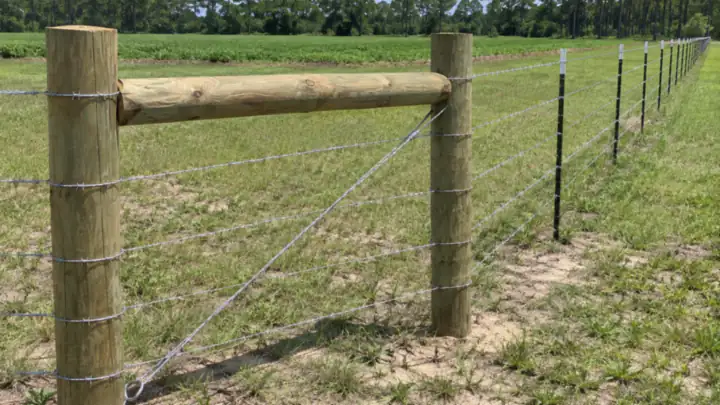
Farm and ranch fence types
Woven field fence
Woven mesh that holds goats, sheep, hogs and dogs, often topped with one barbed strand.
Barbed wire
Four to five barbed strands stretched on T-posts between wooden braces; standard cattle fence.
No-climb horse fence
Tight mesh with no barbs, easy for horses to see and hard for hooves to get through.
Cross fencing
Inside fences that divide pasture into paddocks for rotation or keep groups of animals apart.
Pipe and tube gates
Steel gates hung on braced posts, wide enough for tractors, hay trucks and trailers.
What drives farm fence cost
- Overall footage, plus how many corners, brace assemblies and gates the line needs.
- Wire type, from barbed wire at the low end to no-climb horse wire at the high end.
- Clearing brush, trees and old wire from the line.
- Low, wet or uneven ground along creeks and field edges.
- Post choice: T-posts, treated wood or steel pipe.
Farm & Ranch Fence questions
What fence works best for goats?
Woven field fence at least 4 feet tall, pulled tight on solid braces, is the standard. Goats test fences constantly and slip through barbed wire, so mesh with small openings near the bottom works best. A strand of barbed or electric wire along the top discourages climbing.
How do I fence a property line that runs through woods?
Clear a strip wide enough to build the fence and drive along it later. Confirm the line with a survey first, especially next to state forest or a neighbor's timber. Steel T-posts with wood braces hold up best where limbs are likely to fall.
More fence services
Areas we serve
Farm & Ranch Fence in Milton: get your free quote
Share the acreage, the animals and where the gates should go, and you'll get an on-site quote for farm fence anywhere north of Milton.